– Why We Must Act Now
The global problem: Forests under pressure
Forests are the green lungs of our planet, home to countless animal and plant species, and an essential shield against the climate crisis. Yet every year, millions of hectares of forest disappear – mainly to make room for agricultural products like soy, palm oil, beef, or cocoa. A significant share of these raw materials ends up in European supermarkets. The European Union is one of the main importers of goods whose production is directly or indirectly linked to deforestation.
- Climate crisis: Forests store vast amounts of CO₂. Their clearance releases greenhouse gases and accelerates global warming.
- Species extinction: Over 80% of terrestrial species depend on intact forests. With every cleared hectare, habitats disappear irreversibly.
- Social impacts: Many indigenous communities lose their livelihoods through deforestation and are displaced.
The necessity of deforestation-free supply chains
The destruction of forests is not a natural law but a consequence of global trade and consumption habits. Deforestation-free supply chains are therefore a central tool to:
- Secure climate protection and biodiversity
- Promote social justice
- Enable responsible consumption
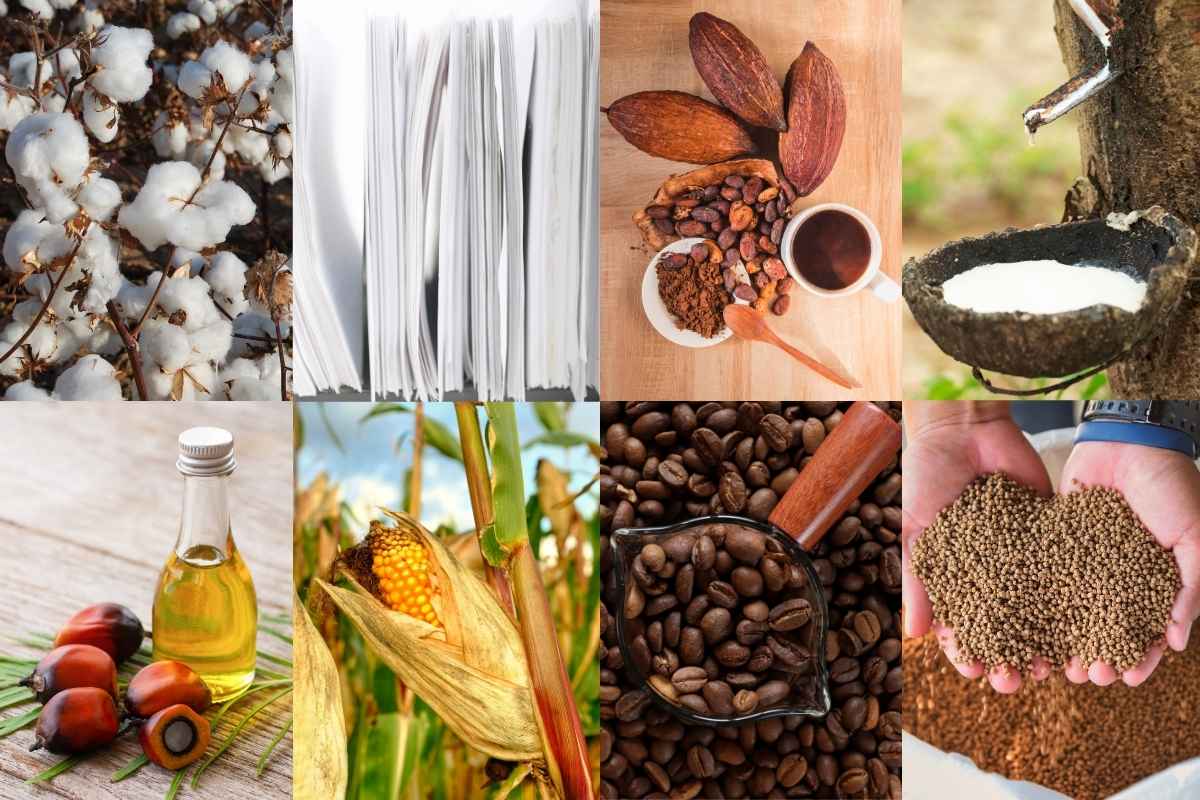
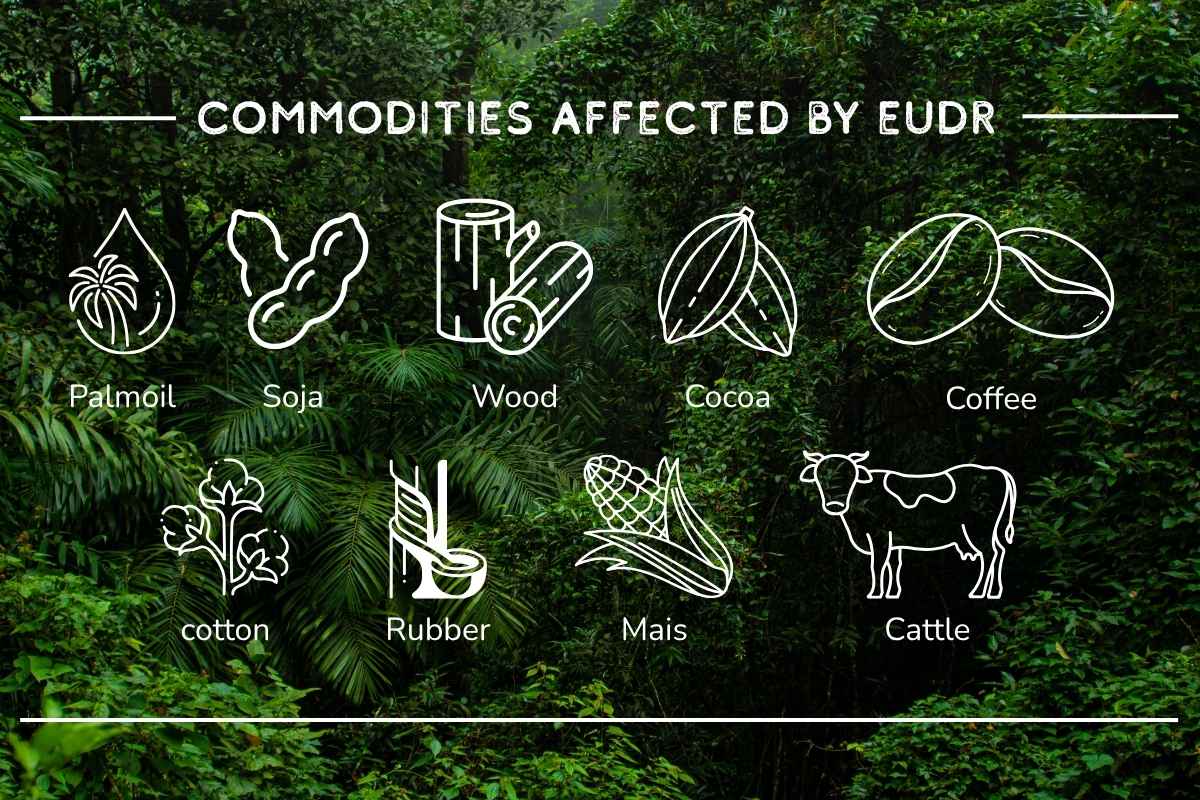
Only if companies ensure along the entire value chain that their products do not contribute to deforestation can real change succeed. This particularly concerns products like soy, palm oil, beef, timber, cocoa, coffee, and rubber – and all goods made from them.
The reality: Laws exist but are too slow to take effect
The EU has taken an important step with the Regulation on Deforestation-Free Products (EUDR): from the end of 2025, certain products may only be sold in the EU if it can be proven that they do not come from deforested areas. Companies must make their supply chains transparent and document the origin of their goods.
But implementation is slow:
- Deadlines have already been postponed because central IT systems, guidelines, and country classifications were only completed in 2024/25.
- Companies struggle with integrating geodata, lack of resources, and uncertainties in practical application.
- Small producers risk being left behind as they hardly meet the requirements.
- Political resistance is growing – some EU countries demand further exceptions and easing.
What is really needed: Consistency and transparency for all
It is not enough to wait for slowly effective laws. Responsibility must not be shifted solely to companies or authorities – ultimately, people who consume and make decisions can make the difference.
What needs to be done now:
- Clear, simple labeling requirements in trade: All products that are not verifiably deforestation-free must be clearly and unmistakably marked in commerce. Only then can consumers make informed choices.
- Stop imports linked to deforestation: Products produced at the expense of forests must no longer enter the EU.
- Strong control and transparency: Public databases and digital traceability must become the standard – for full transparency from origin to supermarket shelf.
- Promotion of sustainable alternatives: Companies that prove deforestation-free supply chains should be rewarded with incentives and visibility.
Conclusion: Change requires courage – and clear signs in everyday life
Regulations like the EUDR are important steps but often come too late and are too slow to take effect. It remains to be seen whether they will be implemented consistently and whether companies recognize the opportunities in genuine sustainability. Ultimately, the responsibility lies with all of us: As a society, we must demand that products linked to deforestation are clearly labeled – and that imports destroying forests are stopped. Only then can we turn forest protection from a vision into lived reality.
Author: Francesco del Orbe 🌍