– Global Applications for Waste Reduction
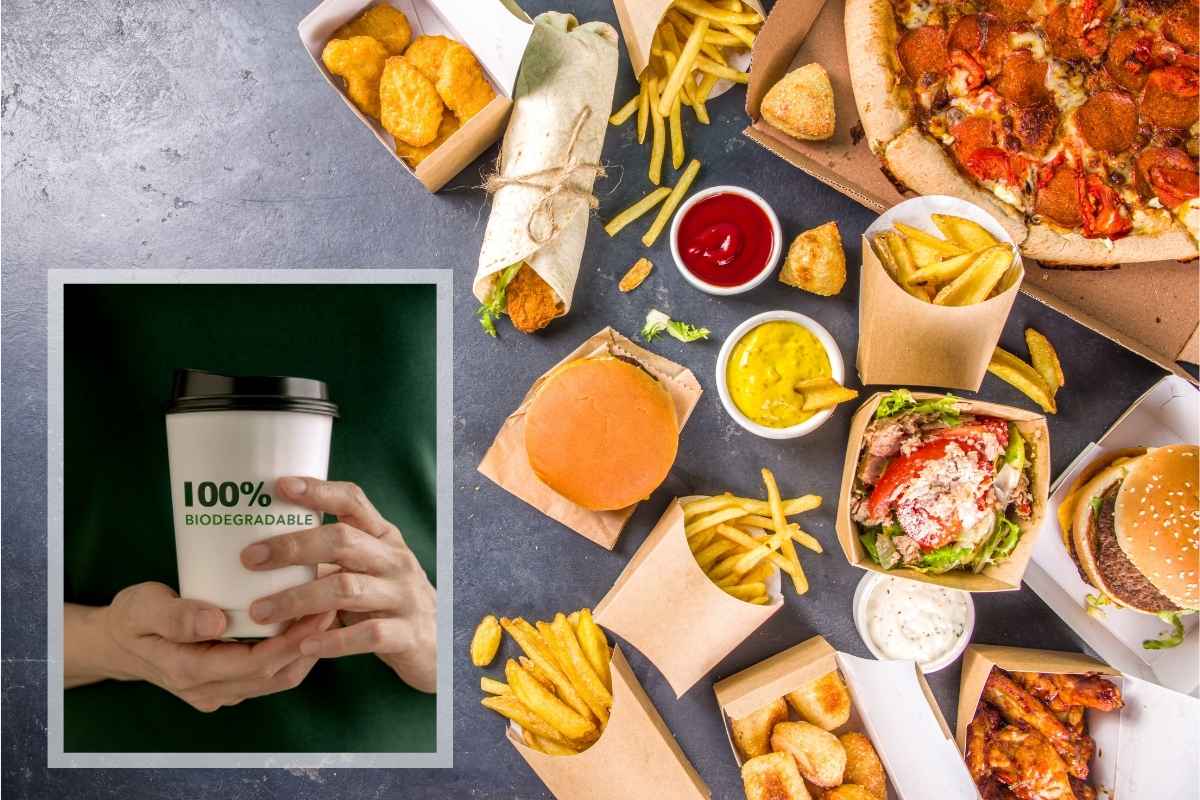
Algae packaging already offers concrete solutions to the world’s most pressing waste issues—from fast-food chains to festivals and sports stadiums. Research shows that numerous companies are conducting tests and bringing the first products to market. However—and let me be clear—none of these companies is truly taking the problem seriously or aiming for genuine market advantages.
Fast-Food Industry: Pioneers of the Algae Revolution
Global Fast-Food Chains in Transition
- McDonald’s aims to use only renewable, recycled, or certified packaging materials worldwide by 2025 and to make all sales packaging recyclable. In Germany, 70% of product packaging already consists of recycled fibers.
- Burger King has announced it will ban PFAS chemicals from its packaging by 2025 at the latest, affecting 27,000 restaurants worldwide.
- Yum China (operator of KFC and Pizza Hut) pledges to reduce the use of harmful plastic packaging by nearly a third by switching to paper straws and biodegradable packaging.
Concrete Algae Projects in Practice
Nordsee Partnership: This fast-food chain, working with Bremerhaven University and the Alfred Wegener Institute, is developing edible algae packaging. The “Mak-Pak” research project aims to deliver a functional prototype for salads and fish sandwiches by 2025.
Just Eat has developed the “world’s first” biodegradable seaweed takeaway box. It is fully recyclable and compostable at home within four weeks. Being tested with three restaurant partners in London, it is set to remove around 3,600 plastic boxes from the waste stream.
Sports Stadiums & Major Events
Massive Waste at Events
Large sports events can generate up to 750,000 plastic bottles per event. A typical NFL game produces about 35 tons of waste, increasing by up to 50% during Super Bowls.
Notpla has already achieved success at events: At the 2019 London Marathon, 36,000 sports drink capsules were distributed at Mile 23. Its contract with Levy UK & Ireland is estimated to cover 75 million items of Notpla’s seaweed-based biodegradable food packaging over three years.
Festivals and Concerts: Highest Litter Risk
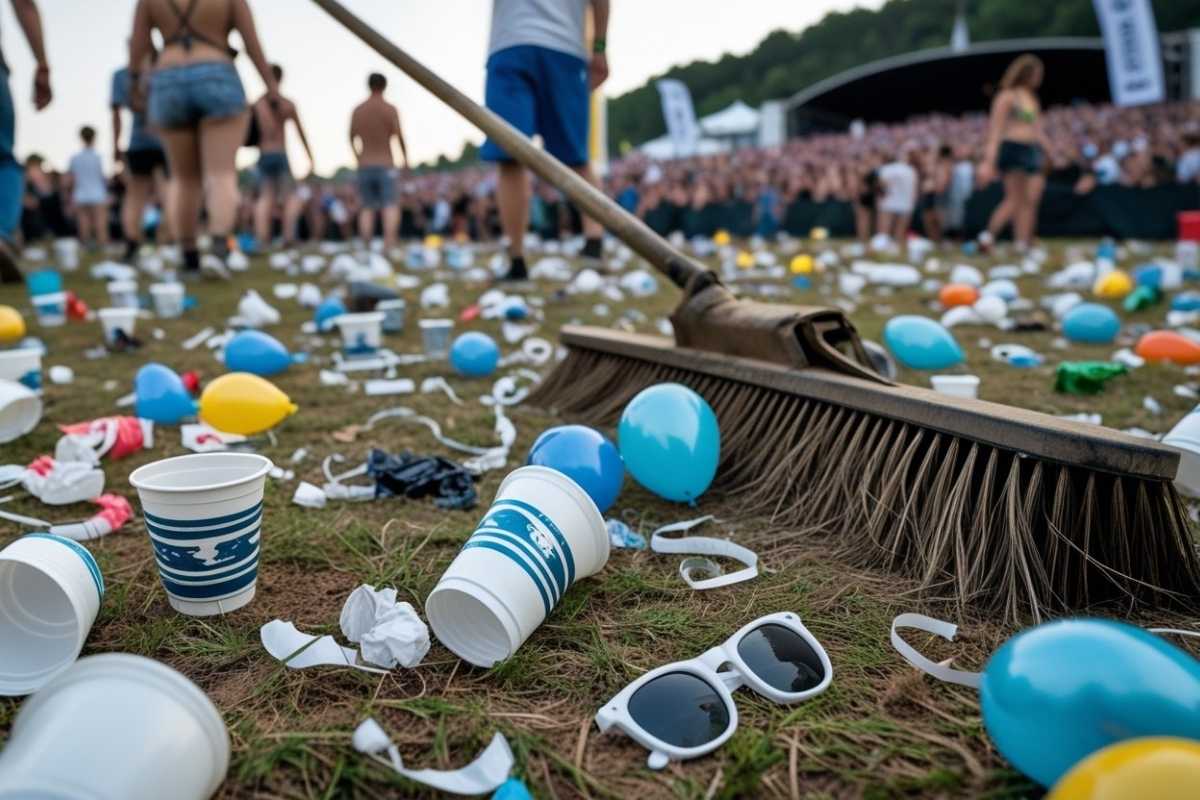
Dramatic mountains of trash at festivals
Major festivals in the USA (like Coachella, Stagecoach, Desert Trip) generate about 100 tons of solid waste per festival day. In the UK, over 3 million festival-goers produce about 23,500 tons of waste annually.
The Glastonbury Festival banned plastic water bottles in 2019 – visitors used 1.3 million bottles in 2017 alone. In 2023, the festival expanded the ban to encompass all single-use plastics.
Successful Pilot Projects
The Bonnaroo Music and Arts Festival introduced stainless-steel water bottles and offered $1 beer discounts for each refill. Free water stations further reduced plastic use.
Airports and Train Stations: Controlled Environments
Airports enforce strict rules for bringing food. Solid foods like fruit, bread rolls, granola bars, nuts, chips, and chocolate are allowed if hygienically packed; liquids like soups, smoothies, or yogurt are banned. These controlled milieus are ideal for algae packaging pilots, as waste disposal is monitored and littering risk is lower.
Theme Parks: Massive Quantities, Controlled Disposal
Disney’s Challenges:
Disney World in Orlando sees about 160,000 guests daily—58.4 million per year—resulting in 25,000 tons of daily waste, including food scraps, packaging, bottles, cans, and discarded accessories.
Disney has made progress: Over 140 tons of plastic/aluminum drinks containers, 310 tons of glass, and 2,015+ tons of cardboard are recycled annually. In 2021, Disney World composted 15 million pounds of food waste.
Canteens and Educational Institutions
Universities and Schools as Testbeds
US colleges and universities generate about 22 million pounds of food waste annually. Roughly 42% of US public school daily waste (about 14,500 tons) consists of food packaging.
BioPak already partners with schools and universities. A typical cafeteria operator can save 15t of CO₂, avoid 5t plastic, and generate 4t of compost per year by switching to BioPak cups, sugarcane trays, and wooden cutlery.
Hospitals: Hygiene Challenges
Safe Reuse Possible
An Australian study found that 1,768 packaged food items per day—6,613kg yearly—can be collected in hospitals. If landfilled, this would create 19t of greenhouse gases per year.
Relevo offers more than 100 German hospitals a deposit-free reusable system: packaging is dishwasher- and microwave-safe, BPA-free, leakproof, and shatterproof.
E-Commerce and Shipping Packaging
Amazon’s Reach
51% of all shipping packaging in the USA and Canada is flexible material. Amazon has switched 13 fulfillment centers and uses AI to optimize box sizes.
Sway is already testing seaweed packaging with major brands like J.Crew and Burton. These packages biodegrade in 180 days and can go into any compost bin.
Coffee Shops: Daily Millions of Cups
Starbucks’ Breakthrough
In Europe, Starbucks has introduced new compostable and recyclable cups with mineral-based coatings instead of plastic, suitable for home composting and widely recyclable. The NextGen Cup Challenge invested $10 million in developing greener coffee cups.
Problematic Areas
Cigarette Butts: The Underestimated Problem
4.5 trillion cigarette butts are discarded worldwide each year. The University of Pisa is researching cigarette filters as substrates for plant cultivation, testing various algae strains to detoxify the resulting waste.
Highway Rest Stops and Construction Sites
Construction and demolition waste makes up 40% of global landfill. About 30% is packaging such as cartons, plastic film, pallets, and wooden crates.
Conclusion: Huge Potential for Immediate Implementation
Research shows that algae packaging is no longer science fiction—it is being tested and deployed in numerous sectors now. Algae packaging is especially promising in high-litter risk situations, since even improperly discarded algae materials disappear in months—not centuries.
Top Priority Applications Based on Waste Volume and Littering Risk:
1. Festivals and outdoor events – highest litter risk, already pilot projects
2. Fast-food chains – huge volumes, tests ongoing
3. Take-away restaurants – largest market, high demand
4. Sports stadiums – Notpla already successfully in use
5. Highway rest stops -high litter risk, substantial volumes
The combination of available technology, ongoing pilots, and urgent need makes algae packaging a practical, immediate solution to the global plastic crisis – especially for the packaging most commonly lost to the environment.
The Harsh Truth: Only 3-5 real success stories among thousands of pilots worldwide. After extensive research into hundreds of algae packaging initiatives globally, the pattern is clear: while everyone is experimenting, only a few companies have developed scalable, profitable solutions. This indifference must end – companies and all major polluters should be required to overhaul their waste emissions and switch entirely to algae or alternative regenerative packaging by 2028.
That would be a real challenge for us all – and would mean consistently boycotting fast-food chains that still use plastic.
Author: Francesco del Orbe 🌍