– Why It Matters So Much
Africa and South America are the green lungs of our planet. But this biodiversity is under threat: overexploitation, climate change, and shifts in land use have turned vast areas into barren, dry landscapes. Rewilding – the restoration of natural habitats – is therefore of existential importance: for species survival, for climate protection, and for the well-being of people.
What Rewilding Means and Why It Is So Important
When soils erode, forests disappear, and savannas dry out, chain reactions unfold: soil fertility declines, water can no longer be stored, biodiversity dwindles, and the local climate becomes hotter and drier. In Africa and South America, millions of people are directly affected because their livelihoods are disappearing.
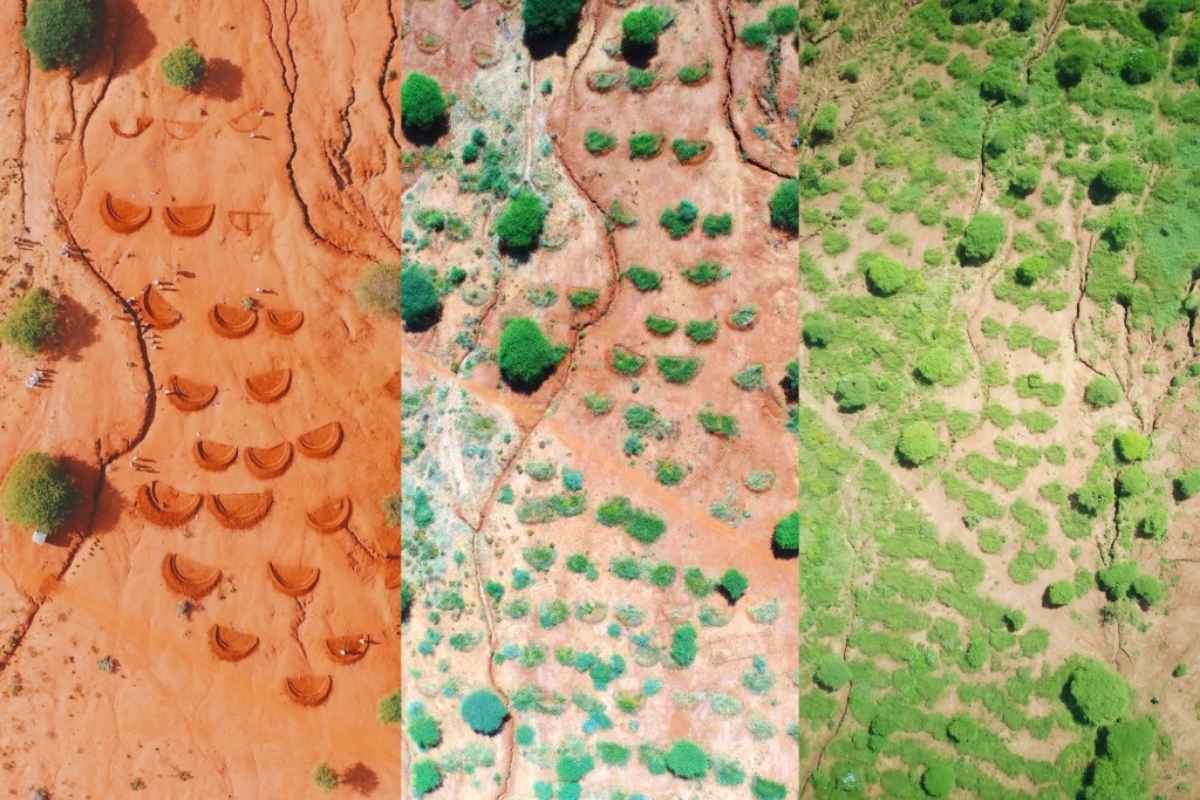
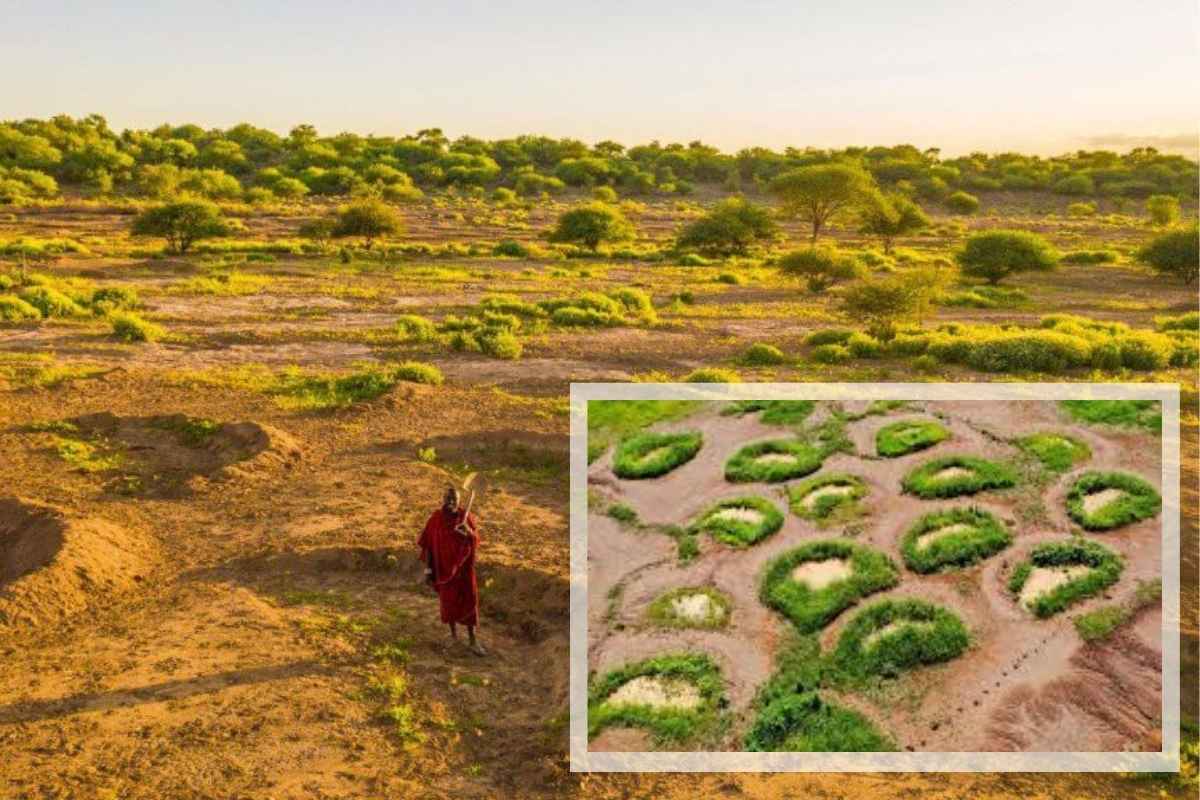
But there is hope: through rewilding, trees, bushes, and grasses return. This helps retain more moisture in the air and allows the soil to absorb rainwater more effectively. In many regions, people have observed that rainfall increases and drought periods shorten after rewilding. This change is life-saving: it enables farming, livestock keeping, and well replenishment. Locals speak of a “return of the rain” – a sign that nature is healing and life is flourishing again.
The Justdiggit Basic Package
Justdiggit has developed a simple yet highly effective method to bring degraded land back to life. At the heart is the so-called “Basic Package,” aimed at anyone who wants to contribute. The package includes:
- Support for local rewilding projects: Together with local farmers, half-moon-shaped pits called bunds are dug into the soil. These collect rainwater, let it seep in, and enable seeds to germinate and plants to grow.
- Large-scale regreening: Using a mix of traditional and innovative water retention techniques, entire landscapes are made fertile once again.
- Education and awareness: Justdiggit educates local communities about sustainable land management, building awareness of the importance of healthy ecosystems.
- Transparent support: Anyone who purchases a Basic Package receives a personalized certificate – a visible symbol of their commitment.
What Justdiggit Has Already Achieved
In recent years, Justdiggit, along with local communities and partners, has achieved remarkable results:
- Over 430,000 hectares of land have been re-greened – that’s about the size of 600,000 football fields.
- More than 18 million trees have returned, actively helping to store CO₂ and restore the natural water cycle.
- Hundreds of thousands of bunds have been dug – in Kenya alone over 100,000, with some projects even exceeding that number.
- Thousands of “Champion Farmers” have been trained – role models who implement and spread the methods in their communities.
- More than 4,600 “Diggers” were actively involved in 2023 – these projects are true community efforts.
- Nearly 50,000 farmers received regular SMS messages with tips, weather info, and success stories – sharing knowledge and motivation across regions.
Why People Participate
The people on the ground are the main drivers of rewilding—and they reap the rewards:
- Tangible benefits: Better harvests, more water, less drought – all real improvements that make life easier.
- Education and appreciation: Training and knowledge sharing foster awareness about sustainable agriculture and the value of intact ecosystems.
- Sense of community: The projects strengthen collaboration and give people a sense of empowerment—they see that they can make a difference.
- Sustainability: The techniques are simple, low-cost, and implementable by anyone – making them both accessible and effective.
Restoring Livelihoods – How Rewilding Prevents Migration
Rewilding transforms lives in Africa and South America: it allows people to stay in their homelands. Regreening brings back fertile land, improves water availability, and strengthens the foundation of local livelihoods.
Many people migrate because they see no future: droughts, poor harvests, water scarcity, and poverty drive them into cities or abroad. Rewilding reverses this trend. When the land thrives again, people can remain with their families, earn income, and live independently. This creates stability and hope – a powerful tool against forced migration.
Economic and Social Impacts
Rewilding is not just good for the environment, but also for the economy:
- Economic growth: Every dollar invested in landscape restoration yields $1.10 to $4.40 in return, depending on the region and methods.
- Jobs: Projects create local employment and strengthen markets – boosting regional economic power.
- Increased income: Small-scale farmers see better yields and can sell surpluses, increasing household income.
- Tourism and value creation: Green landscapes attract tourists and raise the value of a region – benefiting local communities.
- Cost savings: Fewer droughts and floods mean lower costs for disaster relief and rebuilding.
By the way 😉 From an economic point of view, the benefits increase through returning water, green spaces and CO2 sinks as well as the elimination of migration and even the increase in human self-esteem for the local inhabitants, because they can now do something for their income again – even up to 37 times
Chapeau, Justdiggit!
For all you’ve already achieved – and the future you’re making possible
Conclusion
Rewilding Africa and South America is a powerful tool to improve lives, protect the environment, and build sustainable economies. Justdiggit shows how collective action and simple methods can create massive impact – for a greener, more livable planet.
Rewilding doesn’t just bring back trees and water – it brings back hope, purpose, and the chance to stay home.
Author: Francesco del Orbe