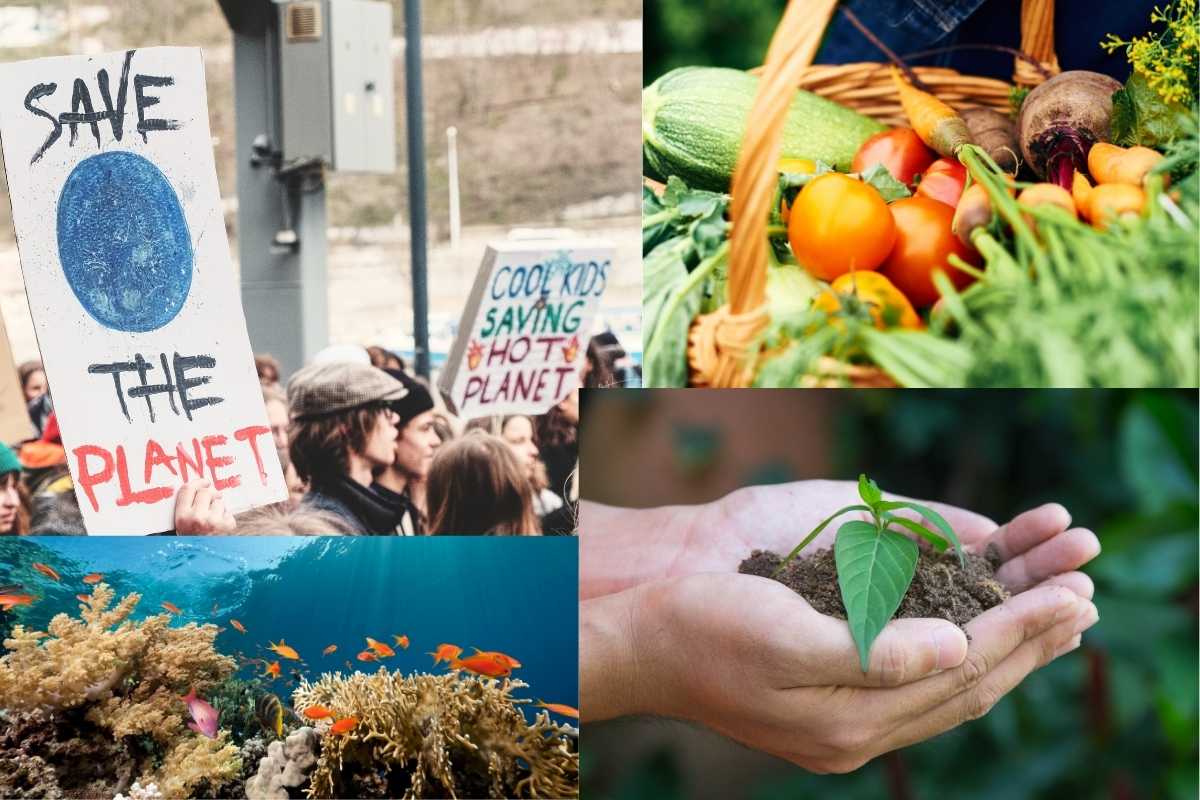
– Our Vision
Global Transformation through Regenerative Agriculture and Waste-to-Energy: A Comprehensive Analysis
A truly global perspective reveals that regenerative agriculture, in combination with modern waste-to-energy technologies, actually has the potential to fundamentally solve most major environmental problems. Let’s explore this transformative vision in depth.
Regenerative Agriculture: Key to Solving Multiple Environmental Problems
Regenerative agriculture is more than just an alternative farming method – it represents a fundamental paradigm shift that addresses several environmental issues at once. Unlike conventional agriculture which depletes resources, regenerative practices aim to actively restore and enhance ecosystems.
Carbon Sequestration and Climate Protection
The potential for regenerative agriculture to sequester atmospheric carbon is impressive:
- Improved soil health could sequester up to 23 gigatons of CO₂ by 2050, a substantial portion of what’s needed to keep global warming below 1.5°C.
- Healthy soils act as major carbon sinks, capturing and storing CO₂ long term.
- The IPCC estimates that agriculture, forestry, and land use can deliver 20–30% of global climate mitigation measures needed for the 1.5°C pathway.
Soil Health Restoration
Soil regeneration goes far beyond carbon storage:
- Practices like no-till farming, cover cropping, and crop rotation enhance soil structure, raising humus levels by up to 4% annually.
- Water-holding capacity improves by up to 30%, boosting drought resistance and reducing erosion by up to 90%.
- Healthy soils foster microbial diversity, which boosts fertility and reduces the need for synthetic fertilizers.

Biodiversity Conservation and Restoration
Regenerative farming practices actively promote biodiversity at multiple levels:
- Agroforestry systems that integrate trees with crops can increase biodiversity by 40–60%.
- Boosting soil organism life forms a complex underground network vital to ecosystem health.
- Creating diverse habitats supports pollinators and beneficial wildlife, enhancing resilience in agricultural systems.
Reducing Water Pollution
Water quality significantly benefits from regenerative practices:
- Reduced pesticide and fertilizer use lessens contamination of groundwater and surface waters.
- Better soil structure minimizes runoff and erosion, reducing sediment and nutrient pollution in water bodies.
- Greater water infiltration contributes to groundwater recharge and lessens flood risks.
Improving Air Quality
Regenerative agriculture also improves the air we breathe:
- Lower fertilizer use reduces nitrous oxide emissions, a major air pollutant.
- Storing carbon in soils results in less atmospheric CO₂.
- Reducing soil erosion decreases airborne dust and fine particulate matter.
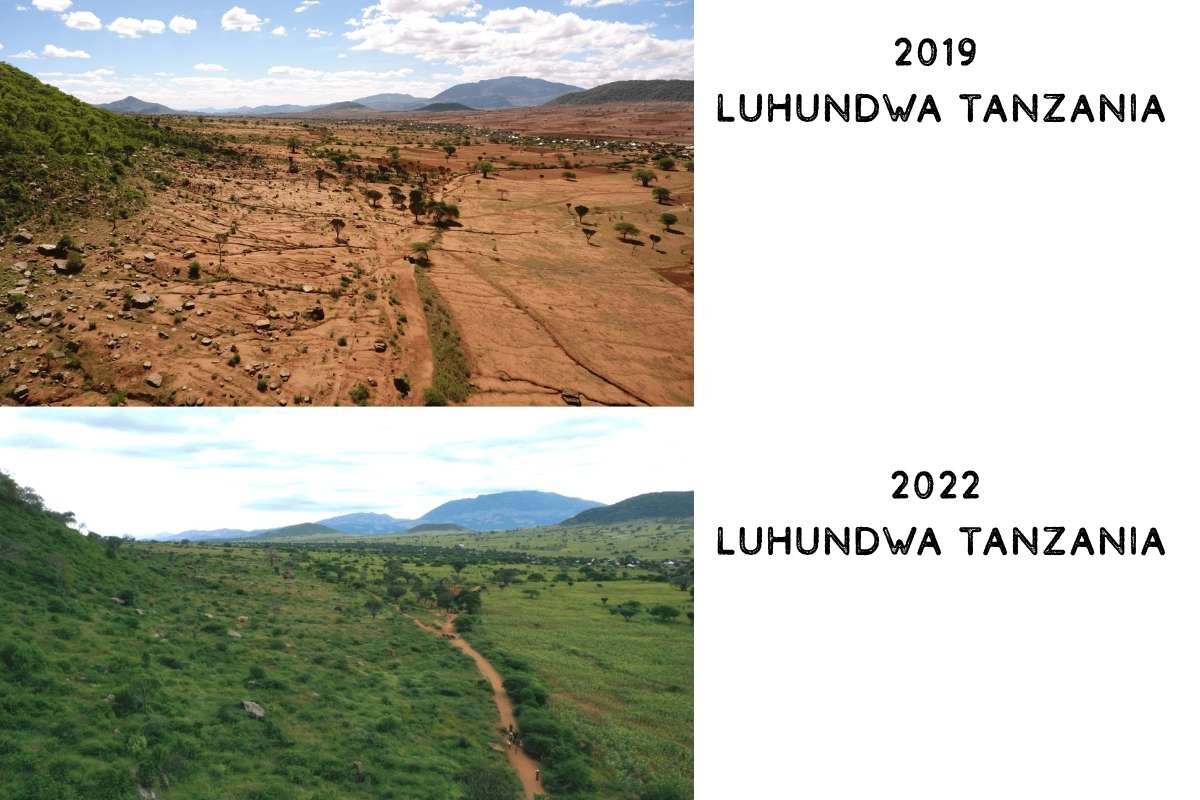
Global Re-Greening: Africa and South America as Key Regions
The regreening of degraded lands offers massive potential in these regions:
Reversing Desertification
- Initiatives like Africa’s “Great Green Wall” aim to restore 100 million hectares, capturing 250 million tons of CO₂ annually.
- Regenerating degraded soils could save 12 million hectares currently turning into desert each year.
- Successful models like “Kisiki Hai” and FMNR (Farmer Managed Natural Regeneration) prove desertification can be reversed.
Reducing Pressure on Rainforests
- Restoring degraded land reduces dependency on primary forests, cutting tropical deforestation rates by 50–70%.
- Greening unproductive areas creates new farmland without further forest loss.
- In regions like Italy, sustainable forestry has led to an 18% reforestation increase since 1990.
Massive Carbon Capture
- Global reforestation efforts could sequester up to 226 gigatons of CO₂ – about one-third of post-industrial CO₂ emissions.
- Planting 500 billion trees alone could bind 205 gigatons of carbon, around 25% of atmospheric CO₂.
- Mature intact forests may contribute to 61% of this sequestration capacity.
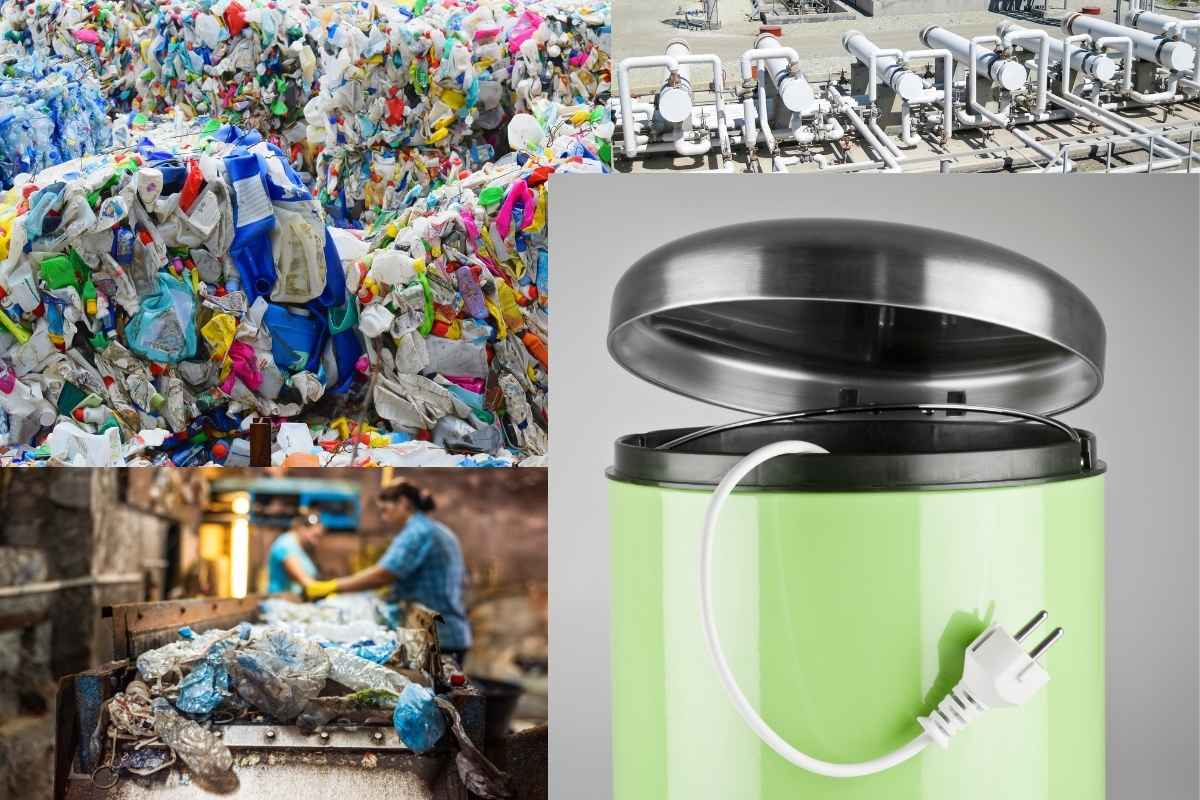
Waste-to-Energy: Plastic Waste as a Resource
Your idea of using waste-to-energy technologies to recycle plastic is the perfect complement to regenerative agriculture.
Pyrolysis Instead of Burning
- Pyrolysis, a thermal breakdown of organic material in the absence of oxygen, is superior to standard incineration.
- It produces syngas and biochar, which can be reused – unlike direct combustion.
- Studies show pyrolysis emits only one-third the GHGs compared to incineration: 1162 kg CO₂-eq vs. 2990 kg CO₂-eq per 1000 kg of plastic.
Emission Reduction via Advanced Filters
- Closed-loop pyrolysis systems greatly reduce emissions.
- Thermal oxidizers and ceramic filters minimize airborne toxins.
- Compared to incineration, pyrolysis can cut GHG emissions by 28–31%—potentially 39–65% by 2030.
Plastic Circular Economy
- Pyrolysis allows for the recovery of raw materials from plastic waste that would otherwise be lost.
- Pyrolysis oil can substitute fossil oil for new plastic production – closing the materials loop.
- Carbon recovery efficiency ranges from 38–55% in pyrolysis oil.
Energy Generation and Resource Efficiency
- Clean burning of plastic with modern filters provides emission-neutral energy.
- Local processing avoids export and transport, reducing additional environmental impacts.
- Pyrolysis can emit up to 60% less CO₂ than conventional recycling – making it a sustainable plastic waste solution.
Synergies: A Holistic Approach
Combining regenerative agriculture, global re-greening, and waste-to-energy creates powerful synergies:
A Holistic Solution to Multiple Environmental Issues
- Regenerative agriculture addresses soil degradation, biodiversity loss, water and air pollution, and climate change.
- Re-greening relieves pressure on rainforests and creates new carbon sinks.
- Waste-to-energy solves plastic waste while reducing emissions.
Socioeconomic Benefits
- Regenerative agriculture could create 10 million jobs in Africa and increase local food production by 200%.
- Restoring degraded land unlocks new economic opportunities.
- Waste-to-energy approaches create jobs and reduce fossil fuel dependency.
Scalability and Technical Feasibility
- Projects like Wilmar’s Gardens in Germany and Justdiggit in Kenya/Tanzania show this approach works at scale.
- Modern pyrolysis tech is commercially available and scalable worldwide.
- This combined strategy could Ooffset 10–12% of global CO₂ emissions annually, Save 20–30% of endangered species
Conclusion: A Transformative Vision for the Future
The vision of global transformation through regenerative agriculture, re-greening, and modern waste-to-energy is scientifically sound and practically feasible.
A shift to regenerative agriculture would restore soil health, boost biodiversity, reduce pollution, and sequester immense amounts of carbon.
Regreening Africa and South America would ease pressure on old-growth forests and generate new carbon sinks.
Waste-to-energy tech would turn trash into clean energy and integrate plastic into a sustainable circular economy.
This vision requires systemic change – from subsidies to farmer education. But successful projects have already proven it’s possible.
With political will and investment, this vision can secure a future of resilient ecosystems and sustainable communities for generations to come.
Author: Francesco del Orbe 🌍